
From Philly and the Pa. suburbs to South Jersey and Delaware, what would you like WHYY News to cover? Let us know!
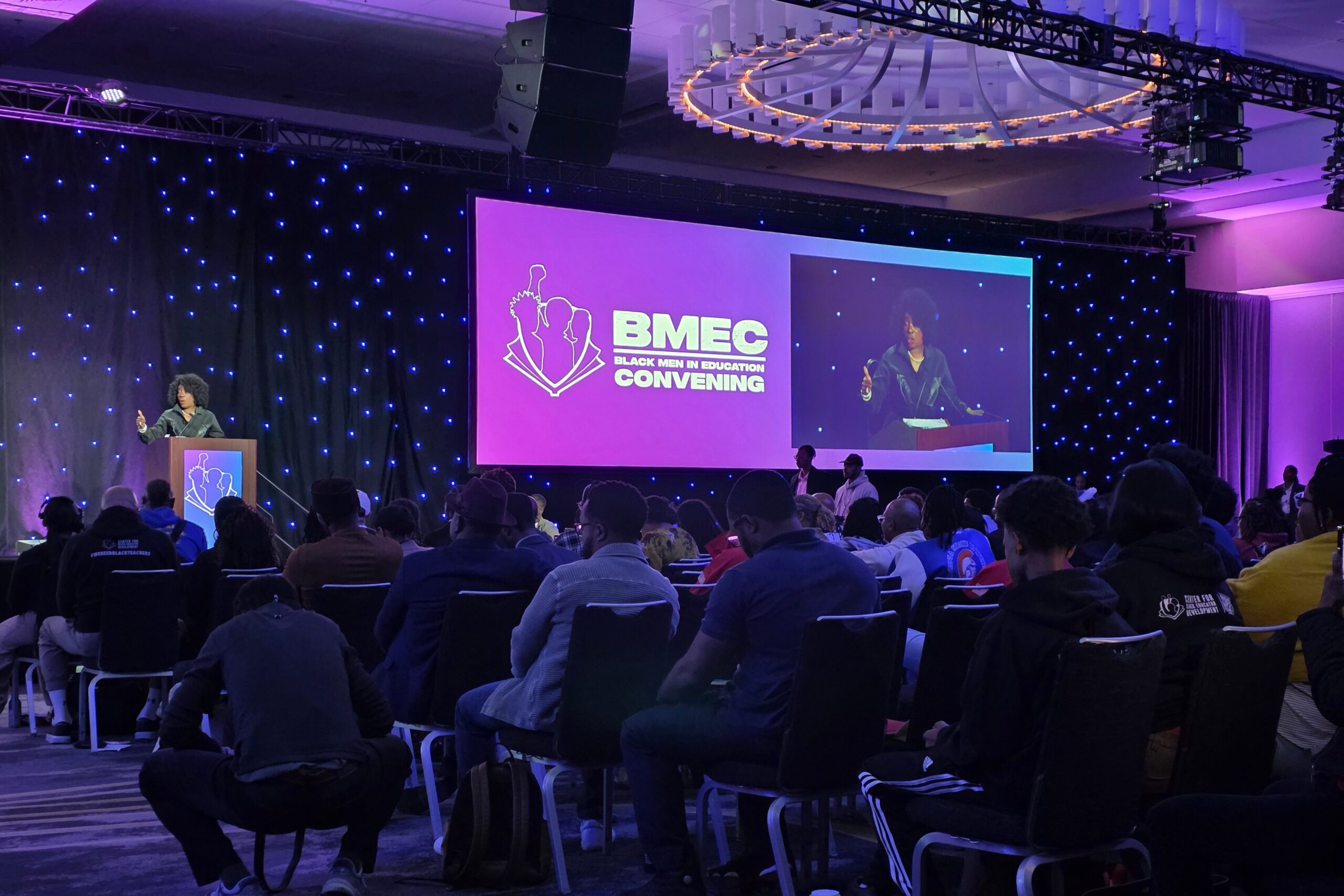
Over the past weekend, more than 1,500 educators packed the Philadelphia Marriott Downtown to support Black male teachers and find ways to bring more into schools.
Just 1.3% of U.S. public school teachers are Black men, according to the Center for Black Educator Development, founded by longtime educator Sharif El-Mekki, who recently had a West Philadelphia street co-named in his honor.
Research shows that Black children thrive with Black teachers, earning stronger grades and a greater likelihood of attending postsecondary education, according to the center.
But bringing anyone into teaching seems more challenging now than ever. In Philadelphia, host city for the Black Men in Education conference, 92% of public school students are of color compared to 39% of teachers, according to research compiled by the PA Needs Teachers coalition.
The three-day conference focused not only on bringing Black men into the profession but also on supporting their long-term growth.
Tony Watlington, superintendent of Philadelphia schools, greeted the crowd Friday and said educators can impact student learning in ways that can overcome poverty and other challenges.
“Highly qualified, well-supported and stable teachers over time make the difference,” he said. “It’s why kids like Tony Watlington have a chance to stand on this stage today, after starting my career as a bus driver and school custodian.”
After Watlington’s remarks, attendees rooted for some local teens who caught the teaching bug early.
Five students from the Science Leadership Academy at Beeber’s Teacher Academy program discussed their motivations to teach and the qualities that make a strong educator.
Teaching Academy leader Tina Dukes, who moderated the panel, said her students apprentice in other schools, learn about curriculum design and earn college credit throughout the two-year program.
Junior Tysaan McLaughlin said his best teachers — one of whom was in the audience — are warm but demanding, holding students to a high standard. “You have to be punctual, you have to actually care about your work,” he said.
Sophomore Ekwueme Tweh said more Black men would join the profession if they understood the difference they make beyond the classroom.
Far beyond a paycheck, “being real about teaching and what it is” is key, he said.
Tweh said more people like him and his father, who is also a teacher, will join the profession “if they see teaching for the impact it has on students, the change it makes in the community, and how historically important it is to Black people as a whole.”


