
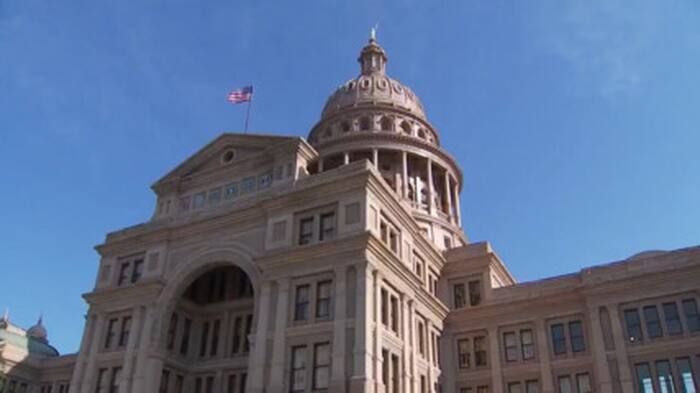
Democrats will take over the governor’s office, the lieutenant governor’s office and the Texas House, but Republicans still hold the Texas Senate, meaning any change to state law will take compromise.
Christian Archer, a political strategist for top Democrats in Texas, said even he was surprised by the results.
“We skipped over magenta and purple, and Texas is blue,” Archer said. “It wasn’t on anyone’s bingo card, that’s the truth.”
Archer said Governor-elect Gina Hinojosa will arrive in Austin with allies across state government.
“She’s got all of the support in the world. We control the Texas House. She’s got a lieutenant governor, she’s got an attorney general. She’s got all of the support,” he said.
He expects the shift to open the door to debates that have long stalled in Austin, starting with marijuana.
“I think there will be a real discussion about legalization of marijuana in Texas. I think that will be on the next legislative agenda,” Archer said.
Asked about data center development, Archer said, “I think data centers area in real trouble. ... I think until they are self-sustaining and there is a long-term plan for data centers, they have come to a screeching halt in this state.”
He also predicted changes to the state’s abortion restrictions.
“I think there are changes coming to abortion laws in the state of Texas, and they are coming in the next legislative session,” Archer said.
Ian Smith, of St. Mary’s University, said it is not that simple.
“That’s the big question — is this relationship one of finding common ground and cooperating ... or is the Senate going to become this last basting of no?” Smith said.
For Hinojosa, delivering on campaign promises will mean winning over Republican senators.
Asked whether that means no major changes overnight, Smith said, “I think it’s going to be gradual changes. Anything too big, that Senate is still a veto player, is still a big part of that.”
The next test comes in January, when lawmakers return to Austin.
Read also:


